The Agile Transformation Collection
In this collection, we’re pulling back the curtain and demystifying Agile Transformation. Keep reading to discover what it takes to achieve long-lasting change and achieve sustainable Business Agility.
Agile Transformation: What’s It About?
"Agile Transformation is never about adopting Agile. It’s about enabling better business outcomes."

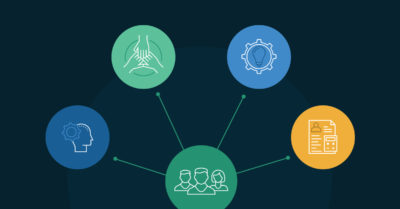
Culture
Culture-first can erode confidence in Agile and Agile methodologies

Practices
Practices-first can mean going through the motions of Agile without real benefits

Systems
Systems-first installs the right environment for Agile culture and practices to thrive within
Organizations typically look to Agile with the best of intentions. Maybe we start by thinking all we need to do is implement Agile practices and go from there. But Agile practices are—at best—a means to an end. At worst, they distract us from the changes we need to make to realize our goals.
Or maybe we think changing culture first is the way in. But what we find with culture-first Agile Transformation is that it typically lacks guidance on how to create the necessary foundation for Agile to work in the first place.
The reality is that culture-first or practices-first Agile Transformations both lead to the same place—going through the motions of Agile rather than becoming Agile. We really must find a way to systematically overcome the structural, procedural, and cultural barriers that are continuously getting in the way of Business Agility.
"Agile Transformation isn’t trivial…and it certainly isn’t easy. But it’s possible if you create the proper foundation for change in the organization before you begin."
Learn More

What Makes Agile Transformation Work?
"If becoming an Agile organization was as simple as a mindset or process change, Agile Transformations wouldn’t fail so often."

Forming
Teams
Making and delivering on commitments

Building
Backlogs
Creating and prioritizing stories

Delivering Working
Tested Product
Getting to an accepted state of “done”
Agile is about 3 Things at its core: forming teams, building backlogs, and delivering working tested product at the end of every sprint. When embarking on your Agile Transformation journey, if you aren’t doing these 3 Things, you aren’t doing Agile—even if you’re going through the motions of Scrum. Because nothing else in Agile works in the absence of the 3 Things.
The catch is that these 3 Things require a specific set of conditions within your organization for them to be effective, and many large organizations don’t already have those conditions in place. So, the work of the Transformation becomes all about creating the conditions, or the ecosystem, for the 3 Things to flourish.
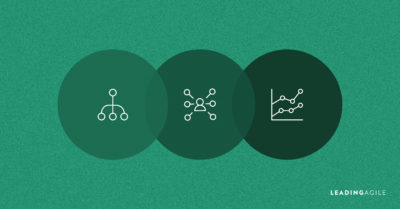
When architecting an Agile Transformation, the goal is to establish the 3 Things at the team level and quickly scale them up to meet the needs of the enterprise. At scale, the 3 Things become structure, governance, and metrics. This is how we garner participation from the organization, manage workflow, make decisions, and measure how well we’re delivering value.
Creating the conditions for the 3 Things isn’t easy, but it’s critical to reap the benefits of Agile Transformation.
Learn More

Navigating Your Agile Transformation Journey
"Before we create change, we must first create safety for the people who will make it happen."

Structure
Cross-functional, collaborative participation for all levels and functions

Governance
Governing and managing workflow and prioritizing decisions

Metrics
Measuring how we deliver value from across the entire organization
Creating change starts by meeting the organization where it is today and laying out a credible plan for getting the organization from where it is to where it wants to go. As Agilists, it’s on us to show executives and other key stakeholders why the changes we want to make are useful and how they will lead them to their desired business goals. The organization shouldn’t have blind faith; it’s up to us to demonstrate how Agile is more effective than what they’ve been doing.
The reality is that people want to change. They only resist because they can’t see how to get there. They can’t see how to get from point A to point B safely and pragmatically. All they can see are the reasons why Agile Transformation won’t work, and so they balk at the sheer scope and magnitude of the change. We must help them know what’s ahead, feel safe, and see what’s possible.
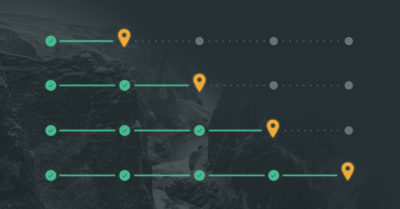
We’ll need a way to safely explore what the organization might look like when the Transformation is finished and help us understand the intermediate states as we move toward our goals. We’ll also need to provide guidance around creating a structural model for the organization, a governance model, and a model for the kinds of metrics and tools we may want to use to demonstrate value to the enterprise.
"The challenge to progressing through an Agile Transformation isn’t to have all the right answers; it’s to get people to see what they couldn’t before."
Learn More

Leading an Agile Transformation
"Agile Transformation is more than just an implementation of Agile methodology by an Agile coach."

Transformation Lead
Coaches who can influence the c-suite

Expedition lead
Pair with delivery leadership to create, execute, and drive the Transformation strategy

Program Coach
Work with delivery teams to improve day-to-day work activities.
Agile Transformation requires executive buy-in, demonstrable progress, and refactoring old technology. And, of course, it requires teaching people a new way to work. Agile Transformation introduces such significant change into an organization that it requires more than a single Agile Coach teaching people the ceremonies of Scrum or how to do SAFe and LeSS. It takes more than one person to guide and illuminate the way to our goals.
We’ll need a team of coaches with varied skill sets, experience, and domain expertise who can work in concert with one another at all levels of the organization. We’ll need coaches who can influence the c-suite, coaches who can pair with delivery leadership to create, execute, and drive the Transformation strategy within the organization, and coaches who work with delivery teams to improve day-to-day work activities.
"Transformation should be transformative. And to be Transformed is to Transform the business from top to bottom, in all the ways people do work."